Lens 03 · Application examples

Four loops.
Each one closed.

An application is not a category of robot — it is a loop that starts somewhere, ends somewhere, and has to close every time without a person walking the route. These four close cleanly. Each one is written up with the model that runs it, the perception it needs, and what breaks it.

60–1,500 kg Floor to 4,500 mm No floor markers 2–4 weeks
Application 01

Feed the line.
Never stop it.

A line-side station runs out of cartons on a rhythm the line sets, not the warehouse. The loop is store → station → empty return, and it has to arrive before the station is empty, not after somebody calls for it.

The operator stays at the station. The replenishment run becomes a mission with a schedule, and the schedule is the thing being optimised — not the robot's speed.

Typical modelX13 — 600 kg, 950 × 650 mm, 2.0 m/s
PerceptionDual LiDAR 360°; ToF where operators reach into the lane
What it replacesReplenishment walking and the "we're out" phone call
Install2 weeks, one floor
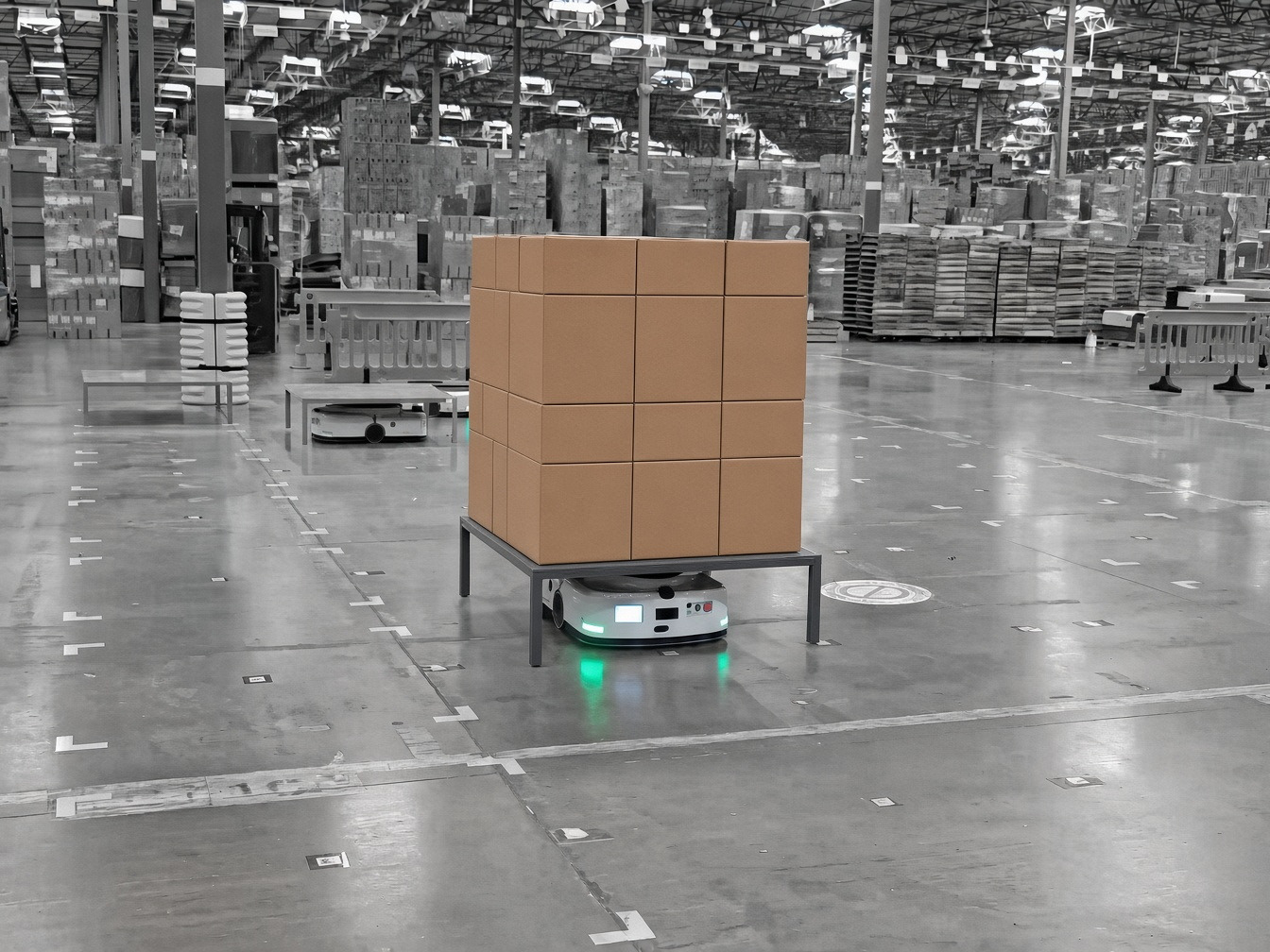
A Dallas Roboter platform AMR carrying a pallet of cartons down a warehouse aisle between racking
Line feedingreplenishment run, cartons on a platform AMR
The failure

The station is blocked

Someone parks a cage in the drop zone. The mission needs a defined exception — wait, reroute, or escalate — agreed before go-live.

The measurement

On-time, not moves

Counting moves rewards a busy robot. Counting on-time deliveries rewards a line that never stopped.

Simulate it

Run your numbers

Distance, demand and shift length give a fleet estimate with the arithmetic shown.
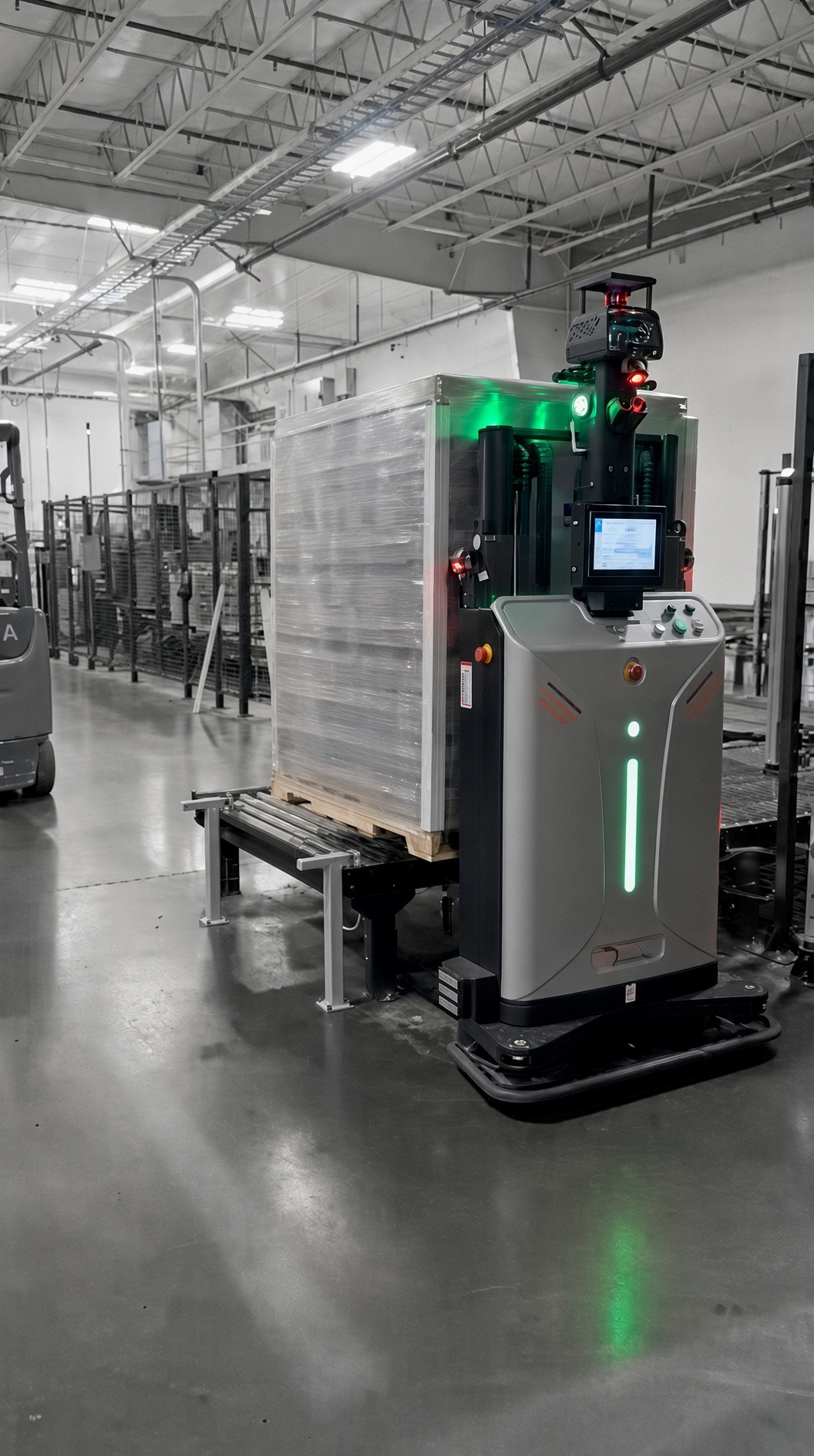
A Dallas Roboter AMR transporting a loaded pallet across a production floor
Pallet transporthorizontal movement, 1,500 kg rated
Application 02

Move pallets.
Not people.

The most common pallet task in a plant is not stacking. It is moving a loaded pallet from one place to another on the same floor — dock to staging, staging to production, production to dispatch.

That is a horizontal job, and it does not need a forklift, a licence, or an operator sitting in an aisle waiting for a gap.

Typical modelPX33 — 1,500 kg, 120 mm lift, 2,182 mm aisle
If it also stacksFX33 — 1,500 kg to 2,000 mm lift
Perception4× LiDAR + ToF; shrink-wrap reflections tested with the real load
Install2–3 weeks depending on dock integration
The failure

Broken pallets

A missing deck board means the forks enter at an angle. The acceptance test uses your pallet pool, not a new pallet from the demo room.

The measurement

Aisle width is a hard limit

2,182 mm is the rated aisle for the PX33. A measured aisle at 2,100 mm is a different project, and the survey finds it on day one.

Simulate it

Run your numbers

Pallets per hour, distance and payload give a fleet estimate with the arithmetic shown.
Application 03

Bring the goods
to the person.

Pickers walk to the rack, find the line, walk back. Most of that time is walking. Goods-to-person inverts it: the rack comes to a fixed station and the picker stays where the light is good and the scanner is mounted.

The gain is not robot speed. It is that picking time stops including travel time — and the station becomes a place you can measure.

Typical modelX13 or X22 with a shelf or tote carrier
PerceptionDual LiDAR + ToF — shelf overhang and pick faces are real geometry
What it replacesTravel time inside the pick cycle
Install3 weeks — the pick station usually has to be rebuilt
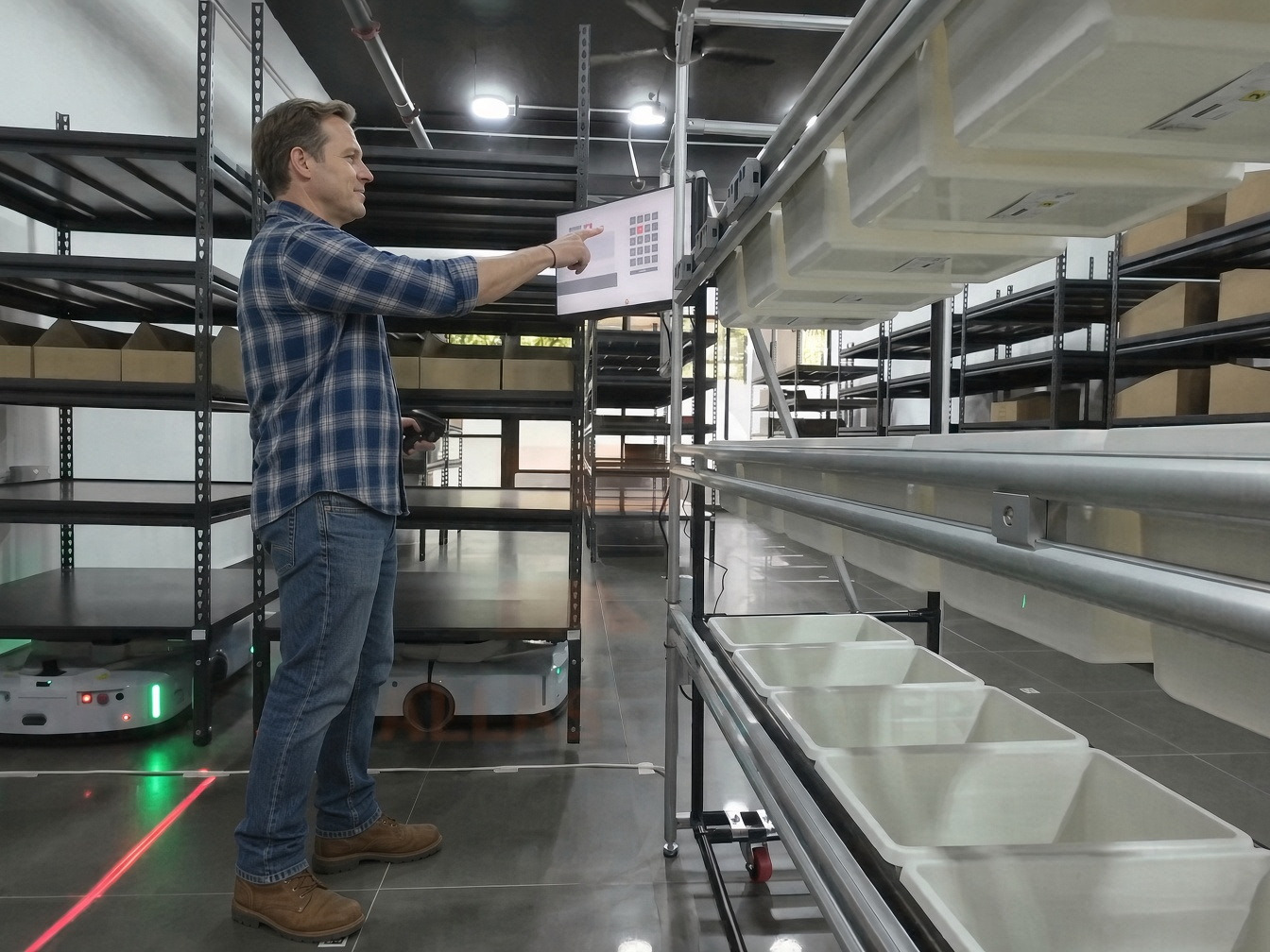
An AMR arriving at a picking station carrying a shelving unit of goods
Goods to personthe rack arrives at the station
The failure

The robot is faster than the picker

Add robots until the picker is the bottleneck, then stop. Beyond that point you are buying queueing, not throughput.

The measurement

Lines per hour at the station

Measured at the station, with a real picker and real stock — not a robot library figure.

Simulate it

Run your numbers

Lines per hour and travel distance give a fleet estimate with the arithmetic shown.
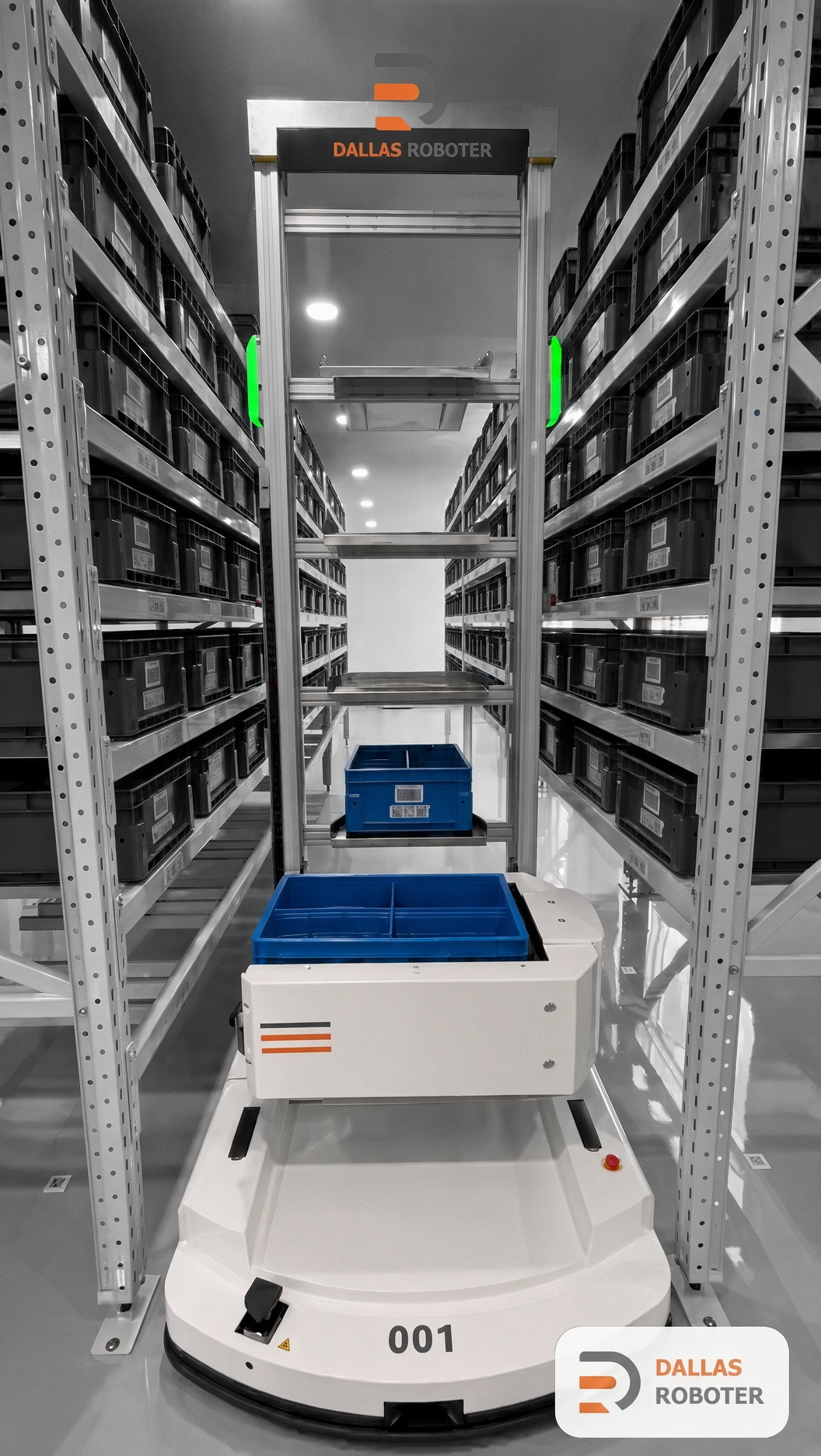
A compact AMR carrying a tote between storage and a packing bench
Tote to personcompact bodies, dense aisles
Application 04

Store dense.
Pick fast.

When the storage has to be dense, the aisles are narrow and the bodies have to be small. The S130 is 710 × 510 mm for exactly this: tote and bin transport where a full-size platform physically will not fit.

High move counts, short distances, and a packing bench that never waits. This is the loop where throughput per square metre is the number that matters.

Typical modelS130 — 60 kg, 710 × 510 mm, 3.0 m/s
PerceptionLiDAR + ToF; narrow-lane clearance is the binding constraint
What it replacesWalking between dense storage and the packing bench
Install2 weeks
The failure

Tote quality

Cracked totes and inconsistent stack heights. The gripper or conveyor interface has to tolerate your worst tote, not your best.

The measurement

Moves per square metre

Dense storage only pays if the move count is high. A slow loop in a tight aisle is expensive floor space.

Simulate it

Run your numbers

Totes per hour and aisle length give a fleet estimate with the arithmetic shown.

What comes after

One loop.
Then every loop.

Every deployment starts with a single workflow. Proven numbers on one loop fund the next, and the same platform, software and Fleet Manager carry across — because the body changes and the intelligence does not.

01

Close one loop

Pick the highest-cost workflow. Pilot a small fleet on a defined lane.

Weeks 1–4
02

Prove the number

Throughput, on-time and labour against the baseline you measured first.

Month 2
03

Add loops

Extend the same fleet to pallet transport, goods-to-person and put-away.

Month 3+
04

Run the floor

One interface, WMS and ERP integrated, no per-robot licence.

Ongoing

Which loop costs you most?

Tell us the workflow and the floor. We will tell you which body runs it, what it needs to see, and how long it takes to install.